Enterprise ecommerce, built to hold up at scale.
High traffic, complex catalogs, multi-store and multi-region, and a back office of systems that all have to stay in sync. Enterprise commerce is a different problem, and most agencies are not built for it. We are a senior team that engineers enterprise ecommerce on Adobe Commerce Cloud, Shopify Plus, and headless, with the security, integrations, and SLAs that scale demands. Sixteen years in, with no junior bench and no handoffs.








When the store has to scale, integrate, and never go down.
Enterprise stores stall for harder reasons than small ones: a platform that buckles under traffic, integrations that drift out of sync, a catalog too complex for off-the-shelf, and a build no one wants to touch. We are the team enterprise brands call when the store has to carry real volume, talk to ERP, OMS, and PIM, and stay up under load. As a senior team across Adobe Commerce Cloud, Shopify Plus, and headless, we pair real engineering with commerce strategy, so the work ships and holds. When the answer is a new platform, our ecommerce replatforming team carries the move end to end.
Credentials & recognition.
 Adobe Solution Partner
 Shopify Plus Partner
 BigCommerce Elite Partner
 Salesforce Partner
 Klaviyo Partner







We're here to help you win, plain and simple.
Same senior team from kickoff to launch and beyond. We do not outsource, we do not disappear after go-live, and we do not hand you off.
Across every phase. Discovery, build, launch, and growth, the same senior team stays with you.
See more winsEnterprise ecommerce engineering, from platform builds to composable storefronts.
Whatever the build needs, the same senior developers handle it end to end. Every engagement is scoped to your roadmap, your integrations, and your scale, not a fixed package.
Monolith or composable (headless)?
The defining architecture decision in an enterprise build is whether commerce stays on a single integrated platform or moves to a composable, headless stack. Both ship serious enterprise stores. The right call depends on your team, your roadmap, your integration surface, and the experience you are after. We build to the same standard either way, and steer you toward the one the business genuinely needs.
A monolithic platform keeps the storefront, catalog, checkout, and admin inside one integrated system, whether that is Adobe Commerce Cloud or Shopify Plus. The platform owns the front end and the commerce engine together, and your engineering goes into custom modules, integrations, and configuration on top. It ships faster, carries a lower operational and maintenance load, and is the right call for the majority of enterprise stores, where a well-built native platform holds the catalog, the volume, and the markets without strain. The trade-off is a front end bound to the platform's rendering model, so the most demanding experience and performance goals can run into a ceiling. For most enterprise catalogs that ceiling sits comfortably above what the business needs, and the simpler operating model pays off for years.
- You want a faster build with lower operational overhead
- A single integrated platform covers catalog and checkout
- Your team prefers managed hosting over a custom front end
A composable build decouples the storefront from the commerce engine, using a custom front end on React or Next.js that talks to the platform and best-of-breed services through their APIs. The platform stays the engine for catalog, orders, and checkout, while the experience layer and the surrounding services are yours to compose. It costs more to build and operate and asks more of your team, but it unlocks bespoke experiences, deep content and search, multi-channel reach, and performance ceilings a single integrated front end cannot reach. The cost is real complexity: more moving parts, more services to monitor, and an architecture that rewards a mature engineering function. When the experience is a competitive advantage and the team is ready to own it, that complexity buys headroom a monolith cannot.
- You need a bespoke, content-rich, multi-channel experience
- Performance and scale demands exceed a native front end
- You have the team to operate a composable architecture
Leaning toward a decoupled front end? Start with headless commerce development.
Proof behind the partnership, not just a pitch.
A few of the stores our senior team has shipped, scaled, and stayed on to grow.
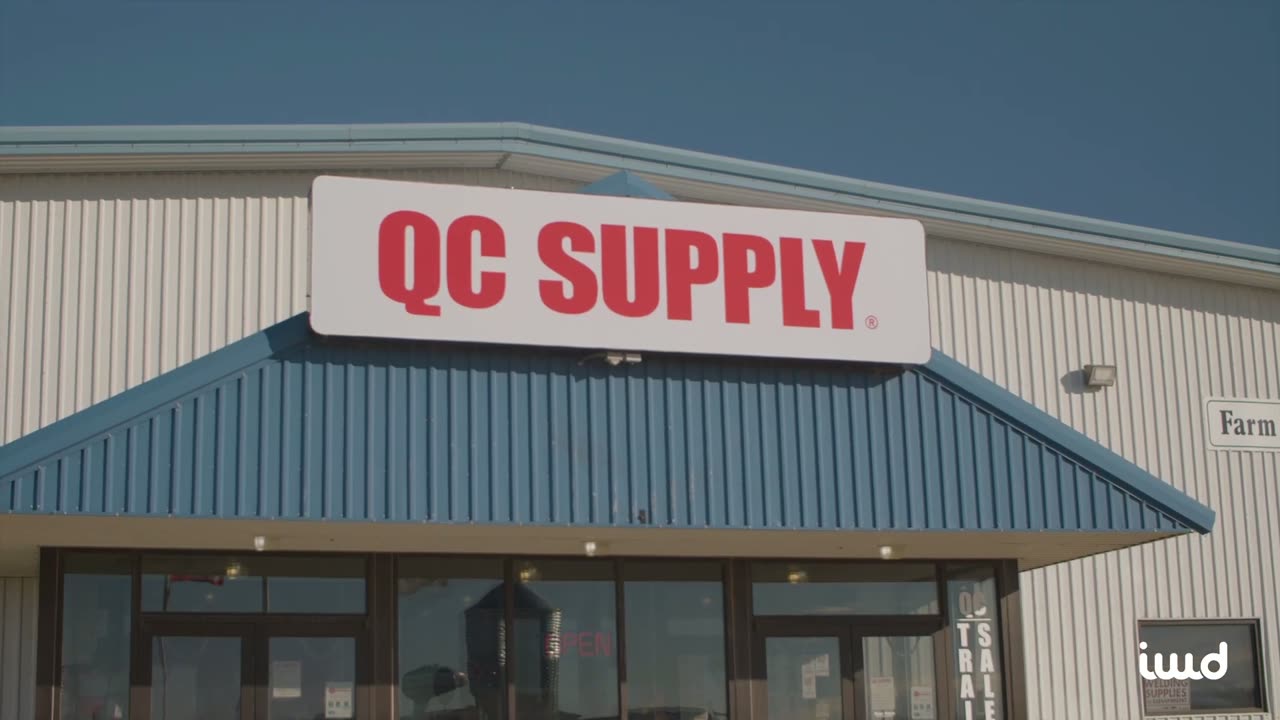
QC Supply
An enterprise Magento B2B rebuild with GroupBy search and Microsoft Dynamics ERP for a high-SKU distributor.

ADTRAN
A B2B Magento Commerce store with gated pricing, configurable software subscriptions, and real-time EDI into the ERP.

Europa Eyewear
A Shopify Plus wholesale storefront with SparkLayer B2B and a Mirakl marketplace for a global eyewear house.
The same senior developers from kickoff to launch and beyond.
Most enterprise projects go sideways for one of two reasons: the work gets passed to a junior team, or the agency vanishes once the invoice clears. At enterprise scale, both are expensive. We built IWD to do the opposite.
Built for scale and complexity
Large catalogs, high order volume, multi-store and multi-region. We architect for the load and the edge cases an enterprise store actually hits, not a demo.
Senior team, no junior bench
You work with the engineers doing the work. Enterprise builds are not where you want your store handed to a training program and left to drift.
Sixteen years in ecommerce
We have shipped on every major commerce platform since 2008, across high-volume DTC, enterprise B2B, and complex multi-market catalogs.
SLA-backed after launch
We stay on with monitoring, defined response times, and a roadmap. The team that built the store is the team accountable for keeping it up.
A clear path from audit to measurable results.
Audit
We review your storefront, stack, integrations, infrastructure, and analytics to map what is constraining the business and where scale is breaking down.
Architect
A phased roadmap with scope, integration plan, platform choice, and a real number. You see the architecture and the risk plan before any code is written.
Build
Two-week sprints, weekly demos, and a shared backlog. The same senior developers ship to platform and security standards every cycle.
Operate
After launch we tune performance, run experiments, monitor integrations, and back the store with SLA support. We stay to make the numbers move.
What enterprise teams ask before they choose a partner.
The questions we hear most before an enterprise build starts. If yours isn't here, just ask.
What makes an ecommerce build enterprise-grade?
Scale and complexity. Enterprise stores run high order volume and traffic, carry large or multi-attribute catalogs, sell across several stores, brands, and regions, and integrate with back-office systems like ERP, OMS, and PIM. They also carry real requirements around security, compliance, uptime, and support that a smaller store never has to think about.
Which platforms do you use for enterprise ecommerce?
Adobe Commerce Cloud, Shopify Plus, and headless or composable commerce on a commerce API. We are platform-agnostic and choose based on your catalog, integrations, regions, and roadmap rather than a single vendor relationship, and we tell you honestly where each one fits.
How do you handle ERP, OMS, and PIM integration at scale?
We build resilient, queue-backed integrations between the storefront and systems like NetSuite, your ERP, order management, and PIM, with retry logic, monitoring, and reconciliation so inventory, pricing, and orders stay accurate across high volume without manual rekeying or silent failures.
Can you support multi-store and multi-region commerce?
Yes. We architect multi-store, multi-brand, and multi-region storefronts with shared catalogs and localized pricing, currency, tax, language, and fulfillment, so each market gets the right experience while the business runs it from one place.
How do you approach security, compliance, and SLAs?
Security reviews, hardened infrastructure, and PCI-aware checkout are part of the build, and accessibility is treated as a requirement. After launch we back enterprise stores with monitoring, defined response times, and SLA-backed support, so the people accountable for uptime have a team accountable with them.
How do you replatform a large store without downtime or lost revenue?
In phases, never a risky big-bang cutover. We audit first, map data and integrations, migrate in stages with SEO and redirects protected, run in parallel where it lowers risk, and validate at each step so traffic, rankings, and revenue carry through the move.
Build the enterprise store your business can scale on.
Tell us where the store is stuck and where it needs to go. We will come back within one business day with a real plan, the right platform, a real timeline, and a real number. No long sales cycle, and no pressure.
Start a project